Early Buddhism & Historical Evidence
Examining the emergence of Buddhism in ancient Magadha by separating physical archaeological artifacts, epigraphy, and the earliest birch-bark manuscripts from later devotional hagiography.
Ancient Magadha & Middle Gangetic Basin
Modern Northern India & Lumbini, Nepal
c. 5th Century BCE
Earliest secure epigraphy: c. 268–232 BCE
Siddhartha Gautama & Emperor Ashoka
Ascetic philosopher & Mauryan patron
Early Pali Nikayas & Gandharan Scrolls
Tipitaka, Vinaya treatises & Chinese Agamas
Pan-Asian & Global Diaspora
East, Southeast & South Asia worldwide
Primary Material & Textual Evidence
Select an artifact to examine its provenance, discovery holding location, and scholarly consensus.
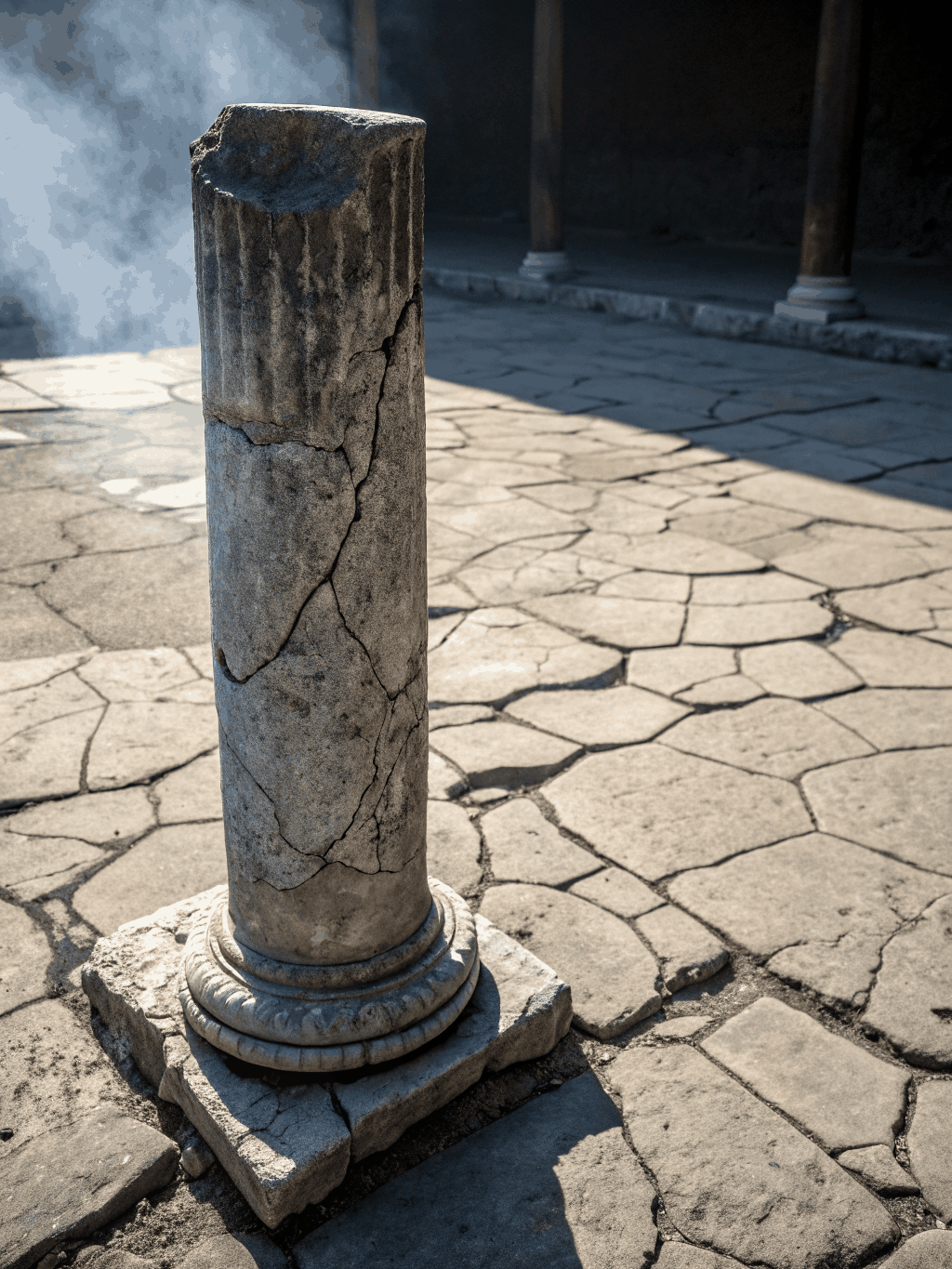
Major & Minor Rock Edicts of Ashoka
Historically DocumentedPrimary Corpus: Corpus Inscriptionum Indicarum (Vol. I): Inscriptions of Asoka
Historical Significance
The earliest securely datable physical inscriptions mentioning the Buddha Sakyamuni, the Dhamma, and the Samgha.
Physical & Inscriptional Data
Inscriptions in Brahmi, Kharosthi, Greek, and Aramaic. The Rummindei pillar specifically confirms Lumbini as the birth site of the historical Buddha, marking the transition from oral memory to imperial epigraphy.
In Situ / Archaeological Survey of India (ASI) & National Museum, New Delhi
Scholarly Consensus
Widely accepted as primary historical evidence of state patronage and early institutionalization, establishing that a Buddhist community existed prior to the 3rd century BCE.
Canonical History vs. Devotional Hagiography
A foundational principle of historical analysis is distinguishing verifiable 5th-century BCE contextual facts from centuries of later theological elaboration.
- Urban crisis and philosophical ferment (Sramana movement) in 5th-century BCE Magadha.Historically DocumentedArchaeological iron-age urban strata across Gangetic cities; Erdosy (1995), Archaeology of Early Historic South Asia.
- An ascetic teacher named Gautama Shakyamuni attracted disciples and founded an order (Samgha).Scholarly InterpretationConsensus analysis of concordances across Pali Nikayas and Chinese Agamas; Gombrich (2006).
- By the 3rd century BCE, Ashokan inscriptions confirm widespread presence across the subcontinent.Historically DocumentedAshokan Minor Pillar Inscription (Rummindei) & Major Rock Edicts; Hultzsch (1925), CII Vol. I.
- Monasteries were linked to trade routes and sustained by lay urban patronage.Archaeological EvidenceEpigraphic donor inscriptions at Sanchi, Bharhut, and Karle caves; Schopen (1997).
- Royal palace upbringing in total seclusion from human suffering before the Four Sights.Religious TraditionLalitavistara Sutra & Jataka Nidanakatha (composed c. 2nd–5th century CE, centuries post-Buddha).
- Supernatural events at birth (white elephant vision, seven steps producing lotus blossoms).Religious TraditionBuddhacarita of Asvaghosa (c. 2nd century CE) & later Mahayana avadana compilations.
- Cosmic battles against Mara and instantaneous omniscient insight into past lives.Religious TraditionDevotional hagiographical strata in Mahavastu and post-canonical Pali commentaries (Atthakatha).
- Fixed canon memorized word-for-word in a single First Buddhist Council immediately post-parinirvana.Debated/UncertainKullavagga XI narrative; modern textual criticism (Norman 1983, Wynne 2007) identifies gradual redaction.
Chronology of Material Evidence
Key verifiable milestones in the historical preservation and material record of early Buddhism.
Emergence in Magadha
Scholarly InterpretationSiddhartha Gautama lives and teaches amidst second urbanization in the Gangetic plain (Magadha, Kosala, Vajji confederacy).
Ashokan Epigraphy
Historically DocumentedEmperor Ashoka issues edicts on pillars and boulders, providing the earliest datable material evidence of Buddhist traditions.
Epigraphic Stupas & Writing
Archaeological EvidenceStone railings at Bharhut and Sanchi constructed. Pali Canon committed to palm-leaf manuscripts at Aluvihara, Sri Lanka.
Gandharan Manuscripts
Archaeological EvidenceEarliest surviving physical scrolls in Kharosthi script; emergence of Gandhara and Mathura anthropomorphic Buddhist art.
Primary Academic Bibliography & Epigraphic References
Peer-reviewed scholarly sources, primary epigraphical corpora, and critical manuscript publications documenting early Buddhist historiography and material culture.
How Buddhism Began: The Conditioned Genesis of the Early Teachings
2nd ed. London & New York: Routledge
Relevance:Methodological textual analysis establishing core early teachings and Gangetic historical milieu.
Ancient Buddhist Scrolls from Gandhāra: The British Library Kharoṣṭhī Fragments
Seattle: University of Washington Press
Relevance:Primary archaeological discovery and translation of the earliest surviving physical Buddhist manuscripts.
Aśoka and the Decline of the Mauryas
Oxford: Oxford University Press
Relevance:Critical epigraphic and historiographical study of the Ashokan edicts as foundational material evidence.
Bones, Stones, and Buddhist Monks: Collected Papers on the Archaeology, Epigraphy, and Texts of Monastic Buddhism in India
Honolulu: University of Hawaii Press
Relevance:Demonstrates the archaeological disparity between early monastic epigraphy and idealized normative texts.
The Origin of Buddhist Meditation
London: Routledge
Relevance:Historical-critical evaluation of early Nikaya strata and the pre-Buddhist ascetic background.
Pāli Literature: Including the Canonical Literature in Prakrit and Sanskrit of All the Hīnayāna Schools of Buddhism
Wiesbaden: Otto Harrassowitz
Relevance:Linguistic and manuscript transmission analysis of Middle Indo-Aryan and canonical Pali.
Explore Buddhist Teachings
Discover the historical development, core philosophical tenets, and the transmission of Buddhist traditions across Asia with explicit historiographical evidence classifications.
The Four Noble Truths
The foundational framework of early Buddhism identifies the nature of suffering (dukkha), its origin in craving, the possibility of its cessation, and the path leading to that liberation.
Key Insight
Understanding the nature of suffering is the first step toward liberation.
1
Topics Reviewed
6 Total
Historical Insights
5 Categories
Evidence Classified
Academic Bibliography & Primary Reference Corpus
Standard historiographical references, critical editions of early Buddhist manuscripts, and epigraphic collections:
- Gethin, Rupert (1998). The Foundations of Buddhism. Oxford University Press, Oxford & New York.
- Salomon, Richard (1999). Ancient Buddhist Scrolls from Gandhara: The British Library Kharosthi Fragments. University of Washington Press, Seattle.
- Lamotte, Etienne (1988). History of Indian Buddhism: From the Origins to the Saka Era. Université Catholique de Louvain, Institut Orientaliste, Louvain-la-Neuve.
- Hansen, Valerie (2012). The Silk Road: A New History. Oxford University Press, Oxford.
- Bechert, Heinz & Gombrich, Richard (Eds.) (1984). The World of Buddhism: Buddhist Monks and Nuns in Society and Culture. Thames & Hudson, London.
Explore our full database of religious traditions and historical timelines.
Development of Buddhist Traditions
Tracing the evolution from the historical Siddhartha Gautama through the councils and global dissemination to modern practice.
The historical Buddha begins his ministry in the Gangetic plains, establishing the core tenets of the Four Noble Truths and the Eightfold Path as a response to Vedic traditions.
Gandhāran Buddhist Birchbark Scrolls & Mahāparinibbāna Sutta
Historiographical Significance: Earliest surviving physical manuscript fragments demonstrating early redaction of canonical sutras and discourse transmissions in Gāndhārī.
The Third Council under Emperor Ashoka standardizes the monastic code and initiates the systematic dissemination of Buddhist teachings across the Indian subcontinent and beyond.
Major Rock Edicts & Pillar Inscriptions of Emperor Ashoka
Historiographical Significance: Contemporary epigraphic confirmation of royal patronization, state-funded Dhamma emissaries, and monastic unity regulations.
Buddhism travels along the Silk Road, adapting to local cultures in Central Asia, China, and Southeast Asia, leading to the emergence of diverse Mahayana schools.
Dunhuang Mogao Caves Library Cave (Cave 17) & Diamond Sutra
Historiographical Significance: Extensive polyglot corpus proving cross-cultural translation networks and the early spread of Mahāyāna and esoteric Buddhist texts.
Buddhism integrates into modern global discourse, with scholarly focus on mindfulness, ethics, and the historical analysis of its diverse philosophical developments.
Pali Text Society Critical Editions & World Fellowship of Buddhists Records
Historiographical Significance: Exhaustive critical romanized editions and modern international charter documents codifying Buddhist dialogue across international bodies.
Peer-Reviewed References & Academic Citations
Critical editions, epigraphic corpora, and historiographical monographs supporting this chronology.
"How Buddhism Began: The Conditioned Genesis of the Early Teachings"
Routledge Critical Studies in Buddhism (2nd Edition), London
"Ancient Buddhist Scrolls from Gandhāra: The British Library Kharoṣṭhī Fragments"
University of Washington Press, Seattle
"Aśoka and the Decline of the Mauryas"
Oxford University Press (Revised Edition), Oxford
"History of Indian Buddhism: From the Origins to the Saka Era"
Peeters Press / Université Catholique de Louvain, Louvain-la-Neuve
Scholarly Sources & Evidence
Explore the archaeological records, manuscripts, and linguistic evidence supporting these historical developments.
Cross-Tradition Pathways & Historiography
Deepen your exploration of contemporary philosophical developments, regional civilizational networks, and analytical comparisons.